OCTOBER 2024 READING

The Adventures of Huckleberry Finn
by Mark Twain
Originally published 1885
Book Club Meeting
October 29, 7:00 PM
Hosted by: Deb Holtz
Snack provided by: Patty Ard
Wine provided by: Val Ross, Patty Ard
Accessibility
Print and Large Print
-
Finger Lakes Library System (print and large print)
E-book
-
Project Gutenberg (free to view online)
-
American English (downloadable formatted pdf book or e-book)
E-Audiobook
-
Finger Lakes Library System
-
NY Public Library
-
American Engish (downloadable MP3 audio)
Mark Twain: About the Author

"Mark Twain was born Samuel Clemens in 1835 in Florida, Missouri, USA. He was the sixth of seven children born to John Clemens, a lawyer, and his wife Jane, although three of Samuel’s siblings died in childhood.
When Samuel was four, the family moved to Hannibal, a town on the Mississippi River. Samuel loved to watch the riverboats and dreamed of being a riverboat pilot. Many of his stories were inspired by his adventures in Hannibal.
When Samuel was 11, his father died. To support his family, Samuel became a printer’s apprentice at the Missouri Courier. He learnt a lot about writing and used public libraries in the evenings to educate himself. Later, Samuel worked as a typesetter for the Western Union, his brother Orion’s newspaper. Samuel created articles and sketches for the paper, and became known for his humour.
At 17, Samuel left Hannibal and found print work in St Louis, New York, Philadelphia and Cincinnati. Then in 1857, he returned to study for two years to become a riverboat pilot.
But 1861 saw the end of Samuel’s river days once the Civil War started. He moved west to join the Confederate Army, although he left before fighting began. After working briefly as a miner, he became a reporter for the Territorial Enterprise in Virginia City, Nevada, and began writing short stories under the name Mark Twain. These funny tales were full of adventure.
Mark’s first popular story – ‘The Celebrated Jumping Frog of Calaveras County’ –was published in 1865. It received international acclaim and soon Mark was one of the most famous American celebrities of his day. He was asked to write his first (and best-selling) book ‘The Innocents Abroad’ (1869) about his travels, and other works followed including ‘Roughing It’ (1872), ‘The Prince and the Pauper’ (1882), and ‘Life on the Mississippi’ (1883).
In 1870, Mark married 24-year-old Olivia Langdon, the daughter of a rich coal merchant. They settled in Buffalo, New York, and had three daughters and a son. Their son sadly died in infancy.
Parenthood led to Mark’s famous ‘river novels’ for children. He read each chapter to his family as he wrote them. ‘The Adventures of Tom Sawyer’ (1876) and its sequel ‘The Adventures of Huckleberry Finn’ (1884) tell the adventures of two boys on the Mississippi River. Huckleberry Finn, in particular, has been called ‘The Great American Novel’ – a tale of a white boy helping a black man to escape slavery in the southern US. It was also one of the first novels to feature the colloquial (everyday) language of its characters. Mark Twain's "river books" have been banned in places as some characters in them use offensive, racist language that was common at the time of writing.
Mark’s writing earned him a lot of money, but he lost most of it by investing in risky ventures. In 1895, he began a world tour giving lectures to pay off his debts, which he did in 1898.
When Olivia died in 1904, Mark returned to New York, and later moved to Redding, Connecticut. It was here that he died from a heart attack in 1910, aged 74."

The Adventures of Huckleberry Finn

WKAR Public Media (Michigan State University) Book Review: for Banned Book Week, Mark Twain's The Adventures of Huckleberry Finn
"American history is not always pretty. Sometimes it’s hard to accept that, but it is true. As Americans, there are blemishes there we don’t like the mirror to remind us of. For over 130 years, 'The Adventures of Huckleberry Finn' by Mark Twain has held up that mirror and dared us to look at the reflection.When Huck Finn was first introduced in 'The Adventures of Tom Sawyer,' he was Tom’s untamed friend, the one who was always ready to play hooky and look for pirate treasure; the friend Tom could always trust to follow him without question. In his own story, Huck takes over as narrator with his distinctive American voice, sharing with us not only his escapades since fleeing his abusive father, but also his growing philosophy about slavery and the world.
In many ways 'Huckleberry Finn' is the story of Jim, the runaway slave who accompanies Huck on his adventures. A complicated character, Jim goes from silly to tragic, sometimes even within the same paragraph. He dreams of freedom, not just for himself but for his wife and children, sharing with Huck his desire to purchase each of them back -- and if he can’t buy them back, he’ll steal them. To help emphasize the heartbreak of Jim’s plight, Huck witnesses a family split up by a slave auction. People in the book are upset by it too, and their inaction speaks volumes.
“The Adventures of Huckleberry Finn” has been one of the most banned books in our nation’s history. From complaints about its use of foul language and stereotypes, to just being a flat-out bad influence, this book has never escaped controversy. For me, whenever I pick up Mark Twain’s masterpiece, my first question is always who exactly did Twain picture as his audience. Sometimes it feels like a children’s adventure, and sometimes a bleak tale for adults. Yes, Huck may dress up like a little girl and get in comic misadventures, but this is also a novel with slavery, beatings, child abuse, alcoholism and murder. Huck’s America is not a friendly one.
If you look at the novel as merely a contemporary tale for Twain’s time period, it is masterful how he handles Jim for that reader. Twain begins by hitting all of the stereotypes Americans would have expected, then he builds on the character until he emerges as a hero, sacrificing his freedom to carry an injured white boy to safety. It is a subtle and brilliant statement against racism and for equality.
With events like the recent racial unrest in Ferguson, Missouri, Mark Twain’s home state, it is obvious that we still need 'The Adventures of Huckleberry Finn.' Our reflection in the mirror is still dirty, and equality in America still has a long way to go. Luckily, this important book will always be there to help ground us. After all these years, it still encourages us to be strong, like Huck, and to tear up the paper and proclaim against our wrongheaded beliefs:
'All right, then I’ll go to hell.'"
author Scott D. Southard
Author Resources
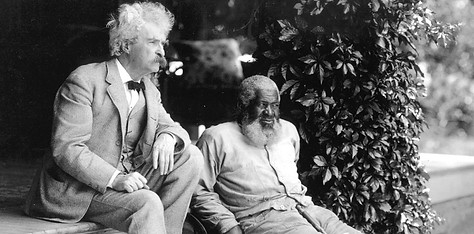
-
Watch the Mark Twain PBS television documentary film directed by Ken Burns (available for PBS Passport members or for purchase as DVD)
-
Learn about the life of Mark Twain by visiting The Mark Twain House & Museum site
-
Read an extended Mark Twain biography at the History channel, A&E Television Networks
-
Listen to the WCNY The Takeaway audio "Mark Twain's Autobiography to be Published 100 Years After Death"
-
Watch the C-SPAN video, part six of Books that Shaped America, "Adventures of Huckleberry Finn"
Mark Twain Quotes: A Selection
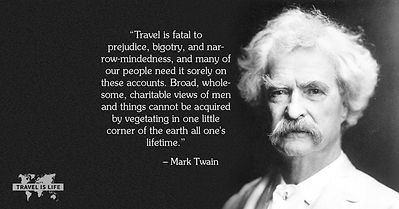
“A successful book is not made of what is in it, but of what is left out of it.”
“Familiarity breeds contempt — and children.”
“It is so unsatisfactory to read a noble passage and have no one you love at hand to share the happiness with you.”
“It’s a classic… something that everybody wants to have read and nobody wants to read.”
“That desire which is in us all to better other people’s condition by having them think as we think.”
“An author values a compliment even when it comes from a source of doubtful competency.”
“If everybody was satisfied with himself there would be no heroes.”
“My books are water; those of the great geniuses is wine. Everybody drinks water.”
“If you tell the truth you don't have to remember anything.”
“Always do right; this will gratify some people and astonish the rest.”
“Do not put off until tomorrow what can be put off till day-after-tomorrow just as well.”
“When I am king, they shall not have bread and shelter only, but also teachings out of books, for a full belly is little worth where the mind is starved.”

DRYDEN BOOK CLUB
est. 2001