JUNE 2025 READING

The Demon Copperhead
by Barbara Kingsolver
published 2022, Harper
560 pp
ISBN-13 978-0063251922
Book Club Meeting
June 24, 2025, 7 PM
Hosted by: Ann Manzano
Snack provided by: Beth Kanalley
Wine provided by: Val Ross/Trudy Cedar
Book selected by: Trudy Cedar
Accessibility
-
Finger Lakes Library System
Large Print
-
Finger Lakes Library System
E-book
-
NY Public Library (cloudLibrary)
-
Amazon (Kindle)
-
Finger Lakes Library System
Audio book
-
NY Public Library (OverDrive)
-
Amazon (Audible)
-
Finger Lakes Library System (CD, digital)
The Author: Barbara Kingsolver

"Barbara Kingsolver was born in 1955, and grew up in rural Kentucky. She earned degrees in biology from DePauw University and the University of Arizona, and has worked as a freelance writer and author since 1985. At various times in her adult life she has lived in England, France, and the Canary Islands, and has worked in Europe, Africa, Asia, Mexico, and South America. She spent two decades in Tucson, Arizona, before moving to southwestern Virginia where she currently resides.
Her books, in order of publication, are: The Bean Trees (1988), Homeland (1989), Holding the Line: Women in the Great Arizona Mine Strike (1989), Animal Dreams (1990), Another America (1992), Pigs in Heaven (1993), High Tide in Tucson (1995), The Poisonwood Bible (1998), Prodigal Summer (2000), Small Wonder (2002), Last Stand: America’s Virgin Lands, with photographer Annie Griffiths Belt (2002), Animal, Vegetable, Miracle: A Year of Food Life (2007), The Lacuna (2009), Flight Behavior (2012), Unsheltered (2018), How To Fly (In 10,000 Easy Lessons) (2020), Demon Copperhead (2022), and Coyote’s Wild Home (2023).
She served as editor for Best American Short Stories 2001. Her books have been translated into more than thirty languages, and have been adopted into the core literature curriculum in high schools and colleges throughout the nation. She has contributed to more than fifty literary anthologies, and her reviews and articles have appeared in most major U.S. newspapers and magazines."

"Demon Copperhead was named an Oprah Book Club selection immediately upon publication, and in 2023 was awarded the Pulitzer Prize for fiction. Demon Copperhead also received Britain’s prestigious Women’s Prize for Fiction (formerly known as the Orange Prize), making Kingsolver the first author in the history of the prize to receive the award twice.
Kingsolver was named one the most important writers of the 20th Century by Writers Digest. In 2000 she received the National Humanities Medal, our country’s highest honor for service through the arts. Critical acclaim for her books includes multiple awards from the American Booksellers Association and the American Library Association, among many others.
The Poisonwood Bible was a finalist for the Pulitzer Prize and the Orange Prize, and won the national book award of South Africa, before being named an Oprah Book Club selection. Animal, Vegetable, Miracle won numerous prizes including the James Beard award. The Lacuna won the Orange Prize for Fiction in 2010. In 2011, Kingsolver was awarded the Dayton Literary Peace Prize for the body of her work. She is a member of the American Academy of Arts and Letters."
Visit Barbara Kingsolver's official site to read her autobiography and complete bibliography
The Demon Copperhead
The Guardian book review:
"This powerful reimagining of David Copperfield follows one boy's struggle to survive amid America's opioid crisis."
"It’s a brave writer who takes on a retelling of Dickens, and of David Copperfield, the most personal of his novels, at that. And yet the American author Barbara Kingsolver’s Demon Copperhead – which transposes this very English, quasi-autobiographical Bildungsroman to her own home territory of Appalachia – feels in many ways like the book she was born to write.
The idealism and concern with social justice that are characteristic of Kingsolver’s worldview find their natural counterpart in Dickens’s impassioned social criticism. While the task of modernising his novel is complicated by the fact that mores have shifted so radically since the mid-19th century – 'immorality', AKA extramarital sex? Who cares? – the ferocious critique of institutional poverty and its damaging effects on children is as pertinent as ever.
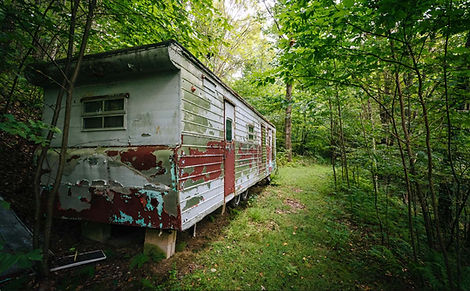
Kingsolver’s hero Damon Fields, known as Demon and nicknamed Copperhead for his red hair, is born to a drug-using teenage single mother in a trailer in Lee County, Virginia. Even in this deprived neighbourhood they stand out by being almost destitute, living between a coal camp 'and a settlement people call Right Poor'. Since his mother is in and out of rehab, Demon is partly raised by the sprawling, warm-hearted Peggot clan. It’s all there in Dickens: the weak, infantile mother, ripe for abuse; the dead father and the disciplinarian boyfriend turned merciless stepfather; the bad odds against which no child stands a chance – and also the outsiders, some loving and others less so, who offer only a limited form of help.
Dickens would have agreed wholeheartedly with Demon’s verdict that 'a kid is a terrible thing to be, in charge of nothing'. If you’re familiar with David Copperfield, then the arc of Demon Copperhead will hold few surprises. Demon becomes a casualty of the 'monster-truck mud rally of child services': case workers who don’t read his file; foster parents who are only in it for the security cheque. Where David is packed off to gloomy Salem House, run by the sadistic Mr Creakle, Demon is quite literally farmed out to 'this big old gray-looking house, like Amityville', owned by a tobacco farmer called Crickson. While there he befriends two other boys, an unadulteratedly Dickensian Tommy Waddles – complete with his prototype’s habit of sketching skeletons – and the charismatic, pill-popping school quarterback Sterling Ford, known as Fast Forward for his prowess on the field. With his 'pharm parties' and status as football aristocracy, Sterling is a seductive recasting of the poisonous 'gentleman' by birth, James Steerforth."

"After enduring being fostered by the pathologically insolvent McCobbs, Demon finds a home with Coach Winfield and his tomboy daughter Agnes, who goes by 'Angus'. Under Winfield’s tutelage he becomes a rising school football star – until an injury nudges his recreational drug habit into full-blown opioid addiction. David’s struggle to find an emotional balance and a purpose in life becomes Demon’s battle to achieve sobriety and to transcend the failure of those around him 'to see the worth of boys like me, beyond what work can be wrung out of us by a week’s end. Farm field, battlefield, football field.'
Kingsolver knows, as Demon says, that 'a good story doesn’t just copy life, it pushes back on it', and a large part of the pleasure lies in seeing what she does with her source material. As a narrator, Demon is every bit as likable and nuanced as David, and the humour and pathos of his voice are enhanced by a slangy southern spin. Elsewhere the update is less successful. Dickens’s Micawbers are feckless but mean well; Kingsolver’s McCobbs are merely exploitative. In an interlude that’s short on subtlety, they make Demon sleep in their laundry-cum-kennel, put him to work on a rubbish dump, even steal his wages. But Kingsolver’s real masterstroke is to draw a parallel between the 'inborn power of attraction' that socially superior but toxic people like Steerforth have for David, and the quick fix that pills seem to offer Demon and almost everyone else in his dead-end world, including his waif-like girlfriend and fellow addict Dori and Mrs Peggot’s granddaughter Emmy, who falls for Fast Forward’s charm.
In David Copperfield, Agnes Wickfield – David’s 'good angel' and second wife – is eminently sober, a word that has an entirely different connotation here. 'Angus' Winfield not only has sobriety in the modern sense (she’s dead set against drugs of any kind), but also possesses the human qualities that the angelic Agnes singularly lacks. 'There’s much to be said,' muses Damon, 'for lying around with a person on beanbags, firing popcorn penalties at each other for offside fart violations.' Take that, Victorian Angel in the House. Angus is a living and appealing alternative, farts and all, to the Doris and Emmys in a way that Dickens’s Agnes never quite manages to be.
David Copperfield wonders 'whether I shall turn out to be the hero of my own life'. Demon Copperhead poses a different question: what is heroism, anyway? When you’re a child born into a life without choices, this powerful reworking suggests, being a hero sometimes consists simply of surviving against the odds."

Additional Book Information
-
SLATE interview with the author
-
Virginia Living review of the book
-
Oprah's Book Club (Oprah Daily) interview with the author
-
NPR Podcast Book of the Day

DRYDEN BOOK CLUB
est. 2001